


Page 177 - IMPC Education Book_low res
P. 177
A ROADMAP FOR MINERALS PROCESSING EDUCATION


            flexible/part-time working and cultural behaviour are reasons behind this
            skewed distribution.

            The data do, however, support the numbers presented in this study; while the
            proportion of female mineral processing graduates entering the industry
            is likely to be between 13.9% and  19.9%, the proportion representing
            industry at mineral processing  conferences is  around 11.5%. Academia
            has a higher fraction of women, at 18.8%, however there is variation in
            the discipline within mineral processing. In the positions of esteem, the
            numbers drop considerably to 5-8% according to the (relatively limited)
            information used here.

            While it is beyond the scope of this study to suggest whether the numbers
            of women in the industry is problematic, or whether steps should be taken
            to address any issues raised, the data do highlight the need for discussion
            of this topic. In order to attract the next generation of skilled workers and
            innovators into  mineral  processing, we  need  to  be  attracting  into  and
            retaining a diverse range of people in the industry.

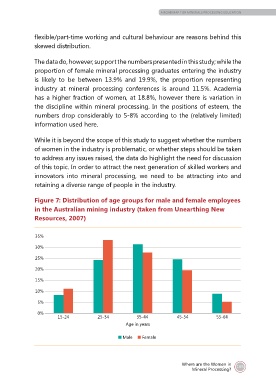
            Figure 7: Distribution of age groups for male and female employees
            in the Australian mining industry (taken from Unearthing New
            Resources, 2007)


            35%
            30%
            25%
            20%
            15%
            10%
             5%

             0%
                   15-24        25-34       35-44       45-54        55-64
                                        Age in years
                                       Male  Female


                                                          Where are the Women in   165
                                                             Mineral Processing?

